Integrative Psychotherapy · Ketamine-Assisted Healing · Rooted in Neuroscience
A depth-oriented psychotherapy practice offering ketamine-assisted treatment for depression, anxiety, PTSD, addiction, and chronic pain.
Request a free 15-minute consultPsychedelics of Louisville is an integrative psychotherapy practice. What we offer is the full clinical container — preparation, medicine, integration, and the ongoing therapeutic relationship that allows what surfaces during a ketamine session to become lasting neurological and psychological change.
Ketamine works at the level of GABA regulation, quieting the overactivated threat circuitry — particularly the amygdala, the brain's alarm system — that keeps so many people locked in patterns they cannot think their way out of. In that quieted state, the prefrontal cortex comes back online, the default mode network loosens its grip on ruminative thought, and the hippocampus begins generating new cells through a process called neurogenesis.
The result is a window of accelerated neuroplasticity: the brain building new pathways — new roads — with a speed and flexibility that ordinary waking consciousness simply does not allow.
Within that window exists what clinicians call the psycholytic state — a phase when the medicine is still present but the person is not fully submerged. Perception is softened, defenses are down, and the nervous system is available in a way it rarely is in ordinary life. A skilled therapist present in that moment can help set intention before going in, track what arises during, and begin making meaning while the experience is still alive — before the default mode network closes back around it.
That window is the opportunity. Psychotherapy is what determines where those new pathways lead.
If you have tried conventional treatment and felt like something essential was being left out, you may be right. The body keeps its own record. This practice knows how to read it.

The body finds its own way back to the light.
Understanding the mechanisms is part of why this practice works differently. The medicine is precise. So is the therapy built around it.
Ketamine modulates GABA — the brain's primary inhibitory neurotransmitter — reducing the hyperactivation of threat circuitry that underlies anxiety, PTSD, and treatment-resistant depression. The nervous system, often locked in a state of chronic defense, is given permission to soften. That softening is not sedation. It is the precondition for change.
The amygdala is the brain's sentinel — scanning constantly for threat, triggering fear and survival responses that can hijack thought, relationship, and the capacity to feel safe in the body. Ketamine temporarily reduces amygdala reactivity, creating a state in which old fear associations can be revisited without the full force of the alarm response that made them so difficult to process.
Chronic stress and trauma suppress prefrontal cortex function — the part of the brain responsible for perspective, regulation, and the capacity to observe one's own experience with some degree of distance. As GABA regulation quiets the threat system, the prefrontal cortex comes back online. The witness returns. Insight becomes possible in ways it simply was not before.
The hippocampus responds to ketamine by generating new neurons through neurogenesis — directly relevant to healing from depression and trauma. Simultaneously, the default mode network loosens its grip on ruminative thought. Patterns that have calcified over years become, temporarily, plastic. That plasticity is the window. Therapy is what directs it toward new roads.
Neuroplasticity and neurogenesis are not metaphors. They are measurable, directable biological events — and they are the reason that ketamine paired with skilled psychotherapy produces outcomes that neither the medicine nor the therapy achieves alone.
Depression that has not lifted with conventional treatment. Anxiety that lives in the chest and the gut before it ever reaches the mind. PTSD and complex trauma. Chronic pain carrying a psychological signature. Addiction as a story the nervous system learned to tell. The disorientation of midlife transition — perimenopause, identity, the quiet grief of becoming someone new.
The providers at Psychedelics of Louisville share a conviction that healing rarely follows a straight line — and that the most important clinical skill is knowing how to listen to what the body is actually saying. Whether that means somatic work, depth psychology, narrative approaches, or ketamine-assisted psychotherapy, the work is always fitted to the person in the room, not the other way around. No protocol replaces presence. No two sessions look the same.
Dr. Monica Hurt, DSc, LMFT, brings eighteen years of integrative clinical practice to this work. Jim Clines, LMFT, brings his own depth of clinical experience and a skilled, grounded therapeutic presence. Both hold certifications in ketamine-assisted psychotherapy through the Integrative Psychiatry Institute in Boulder, Colorado. KAP is offered in partnership with an in-house licensed medical provider with eight years of experience in psychedelic medicine and MAPS training — present, embedded, and never farmed out.
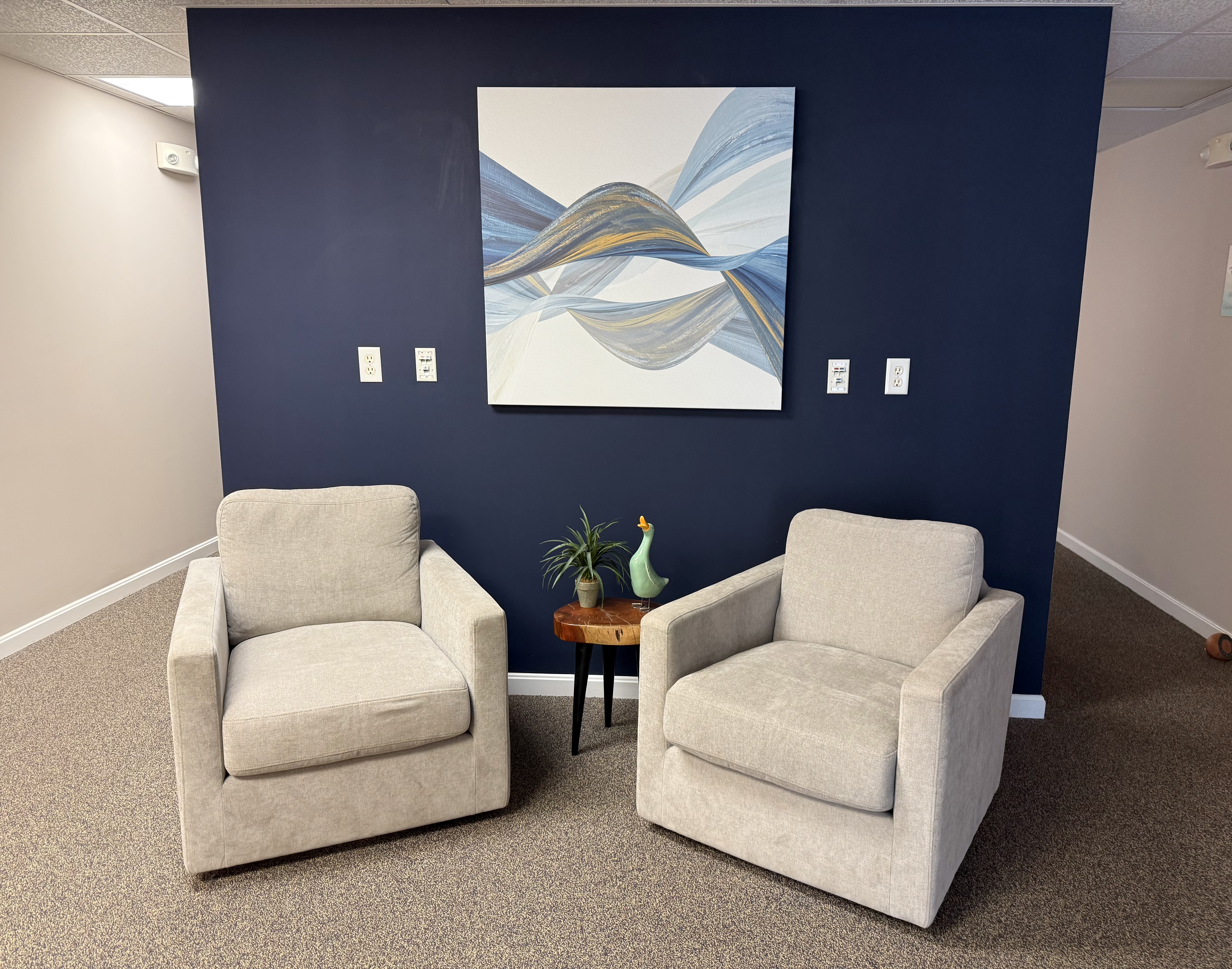
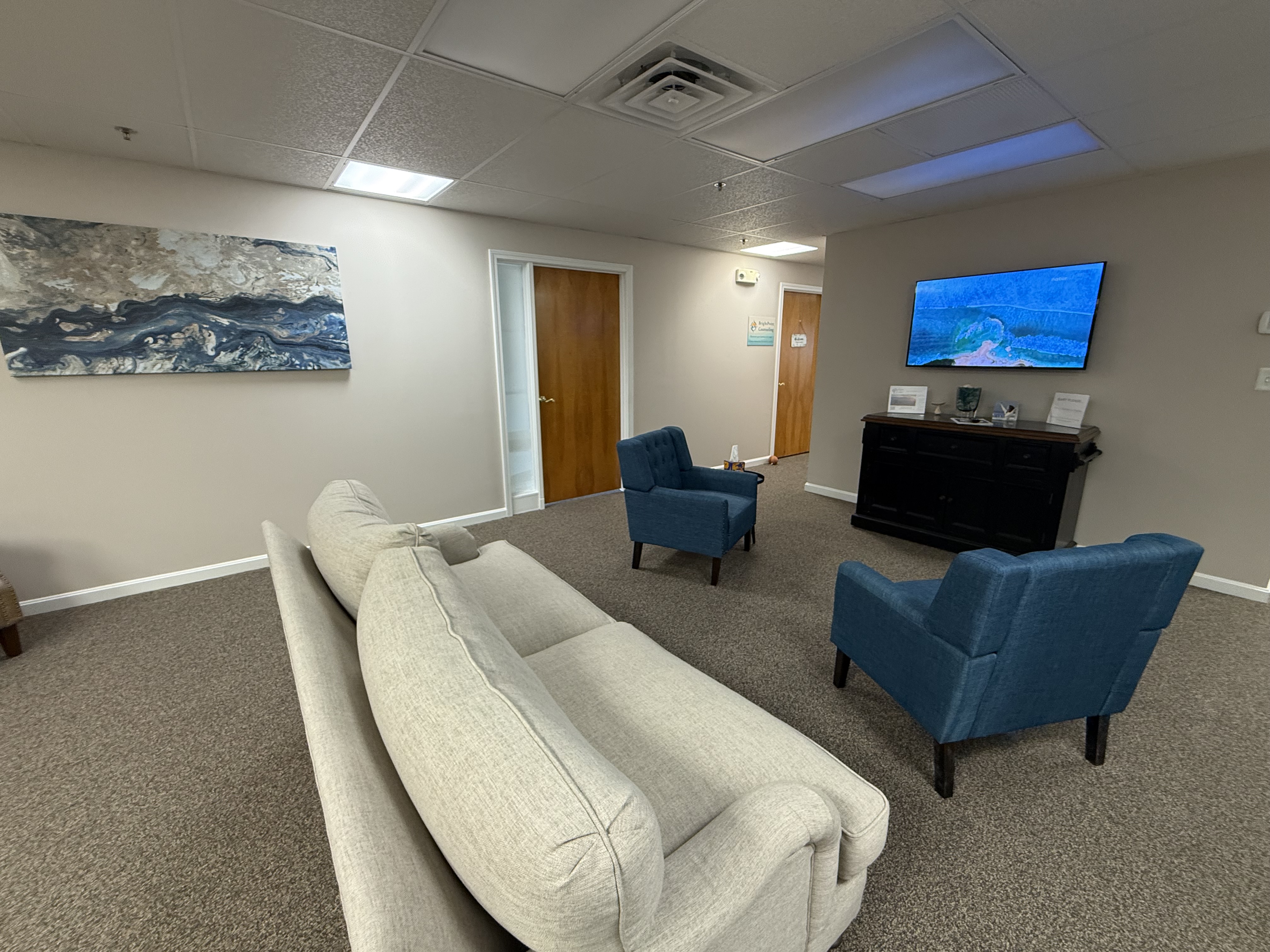
Every detail of this practice — the room, the relationship, the protocol — is built around one conviction: that the right container changes everything. Step into a space that was created with your healing in mind.
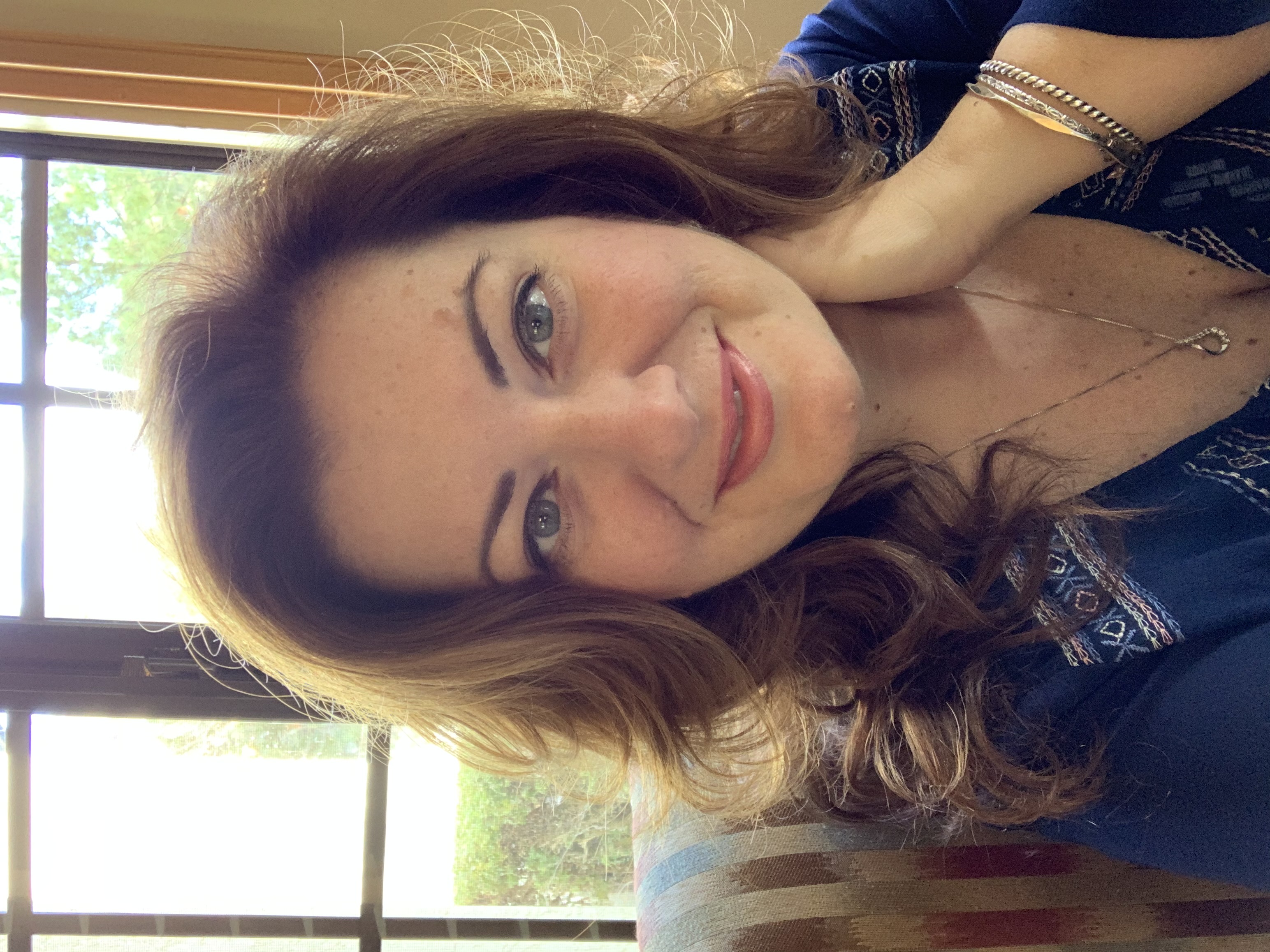
Dr. Monica Hurt came to this work the way most healers do — through her own threshold. Over eighteen years of clinical practice, she has woven together approaches that most practitioners keep separate: somatic experiencing, Ericksonian hypnotherapy, depth psychology, shamanic principles, AASECT-trained sex therapy, and ketamine-assisted psychotherapy. The result is a practice that treats the whole person — body, nervous system, psyche, and spirit — as one inseparable system.
Her doctoral work in integrative health brought the neuroscience into sharp focus. The body is not a symptom to be managed. It is a threshold to be crossed — and the therapeutic relationship is what makes the crossing possible. Dr. Hurt developed Liminal Somatic Therapy from that conviction, an integrative model built on the understanding that healing happens at the intersection of neuroplasticity, somatic awareness, and depth psychological work.
She does not follow a protocol. She follows the person. With a clinical tool bag built over nearly two decades, she tracks what is activated in the body, what it represents, where it originated, and how deep the pathway runs — then meets it there, with the right tool at the right moment.
"For nine years, I worked with Monica to manage my bipolar I disorder, maintaining an even keel — until a sudden descent into severe, suicidal depression. She introduced the idea of ketamine therapy and immediately connected me with the medical team to ensure I was a suitable candidate. What followed changed everything."— Patient, Psychedelics of Louisville
Creating new pathways and changing lives,
one journey at a time.
The field of psychedelic-assisted therapy is expanding rapidly — and with it, a proliferation of ketamine clinics where a person sits alone with an IV in their arm, no trained therapist present, no intention set, no one there to help make meaning of what arises. The medicine session ends. They go home. What happened in that room stays in that room, unprocessed and unintegrated.
That is not a failure of the medicine. It is a failure of the container.
This is the work. It moves slowly enough to go deep.
Held through the journey — every session, every time.
Neuroplasticity and neurogenesis are not passive events. The brain's heightened capacity for building new pathways — in the hippocampus, across the prefrontal cortex, through the loosened architecture of the default mode network — is real, and it is directable. Without skilled therapeutic support before, during, and after the medicine, that capacity goes untargeted. The window opens and closes without anything being built.
What this practice offers is the architecture. The medicine quiets the amygdala and opens the door. The therapy — the relationship, the somatic attunement, the integration — is where new pathways become a new way of living in the body.
A free 15-minute conversation to hear where you are and whether this practice is the right fit.
A full clinical and medical evaluation with our in-house provider to confirm candidacy and safety.
Therapy sessions to set intention and build the relationship that will hold the medicine work.
IM ketamine administered with your therapist present throughout, tracking and supporting what arises.
A follow-up session within 24 to 48 hours to make meaning of the experience and direct the change.
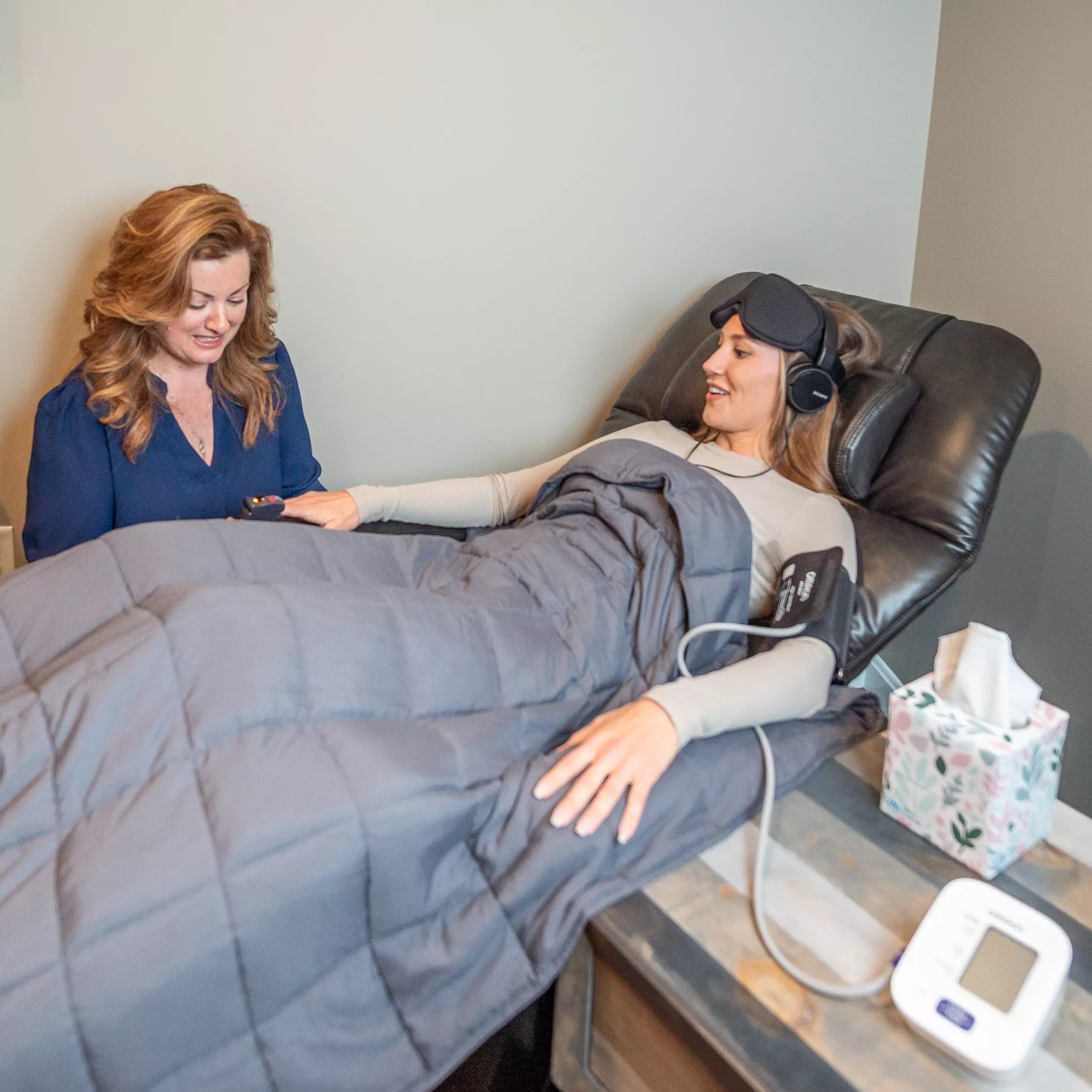
Every patient completes a full medical and psychological screening before any medicine session. Ketamine is administered by a licensed medical provider with vital sign monitoring throughout, and a trained therapist remains present for the duration of the session.
Most patients complete six medicine sessions, with additional sessions added if clinically indicated. Each medicine session is paired with preparation beforehand and integration within 24 to 48 hours afterward.
Ketamine-assisted psychotherapy is typically self-pay, though many patients are able to use HSA or FSA funds. We are happy to discuss what to expect financially during your free consult.
Most patients have not. Preparation sessions exist specifically to help you understand what to expect and feel grounded going in, regardless of prior experience.
7608 KY-146, Suite 100
Pewee Valley, KY 40056
We are located just off KY-146 in Pewee Valley, easily accessible from Louisville and the surrounding communities. Ample parking is available on site.
The best way to connect is through our online consult request. Leave a message and we will be in touch to schedule your free 15-minute conversation.
The first conversation is free, informal, and without pressure. It is simply a chance to hear about where you are and whether this practice is the right container for what you are carrying.
Request your free 15-minute consult Prefer to reach out directly? Leave a voicemail or send a message and we will be in touch.